

Background
Located in Treaty 4 Territory and guided by the Treaty Principles in kâ‑nâsihcikêwin, the City of Regina acknowledges the harms of the past and our responsibility to support healing, culture and connection to the land. We are honoured to live and work alongside the Cree, Saulteaux, Dakota, Lakota, Nakota and the Métis Nation. The City strives to uphold the Truth and Reconciliation Commission’s Calls to Action by creating opportunities that centre Indigenous voices, stories and relationships to the land.
The Urban Forest Management Plan is a long‑term strategy for protecting, planting, caring for and growing Regina’s urban forest. Grounded in wîhci‑atoskêwin askîhk – living on the land in harmony – the Plan recognizes our shared responsibility to steward the urban forest in ways that honour the land’s spirit, support ecological balance and strengthen relationships across generations. Regina’s urban forest includes all living things in the city, including trees, plants, soil, naturalized areas, park spaces and the ecosystems that support them.
Through this Call for Design, Indigenous youth are invited to share their vision of life, growth and connection through a “Tree of Life” design that will help shape how Regina understands and celebrates its living landscape for generations to come.
The selected design will serve as the visual symbol of the Urban Forest Management Plan and will appear in the final policy document, as well as educational materials, presentations, community programs and public communications. Its purpose is to help residents connect with the goals of the Plan and the living landscape it represents.
Rooted in miskâsowin—finding one’s sense of origin and belonging—this initiative creates space for Indigenous youth aged 12 to 20 to express who they are and how they see themselves in relationship with the land and the City of Regina. It offers young people a meaningful role in shaping how the community understands and celebrates the landscape we all depend on. By inviting Indigenous youth to lead this visual identity, the City honours Indigenous knowledge of land stewardship and reflects a future where culture, environment and creativity grow together.
Evaluation Criteria
Designs were evaluated based on the following criteria:
- Relevance to the “Tree of Life” theme
- Reflection of Indigenous identity
- Creativity, originality and cultural expression
- Connection to the natural environment, life and community
- Suitability for reproduction across print and digital formats
Honoraria and Prizes
Five Indigenous youth were selected as finalists.
- First prize: $1,000 - Lili Beckett, MacNeill Elementary School
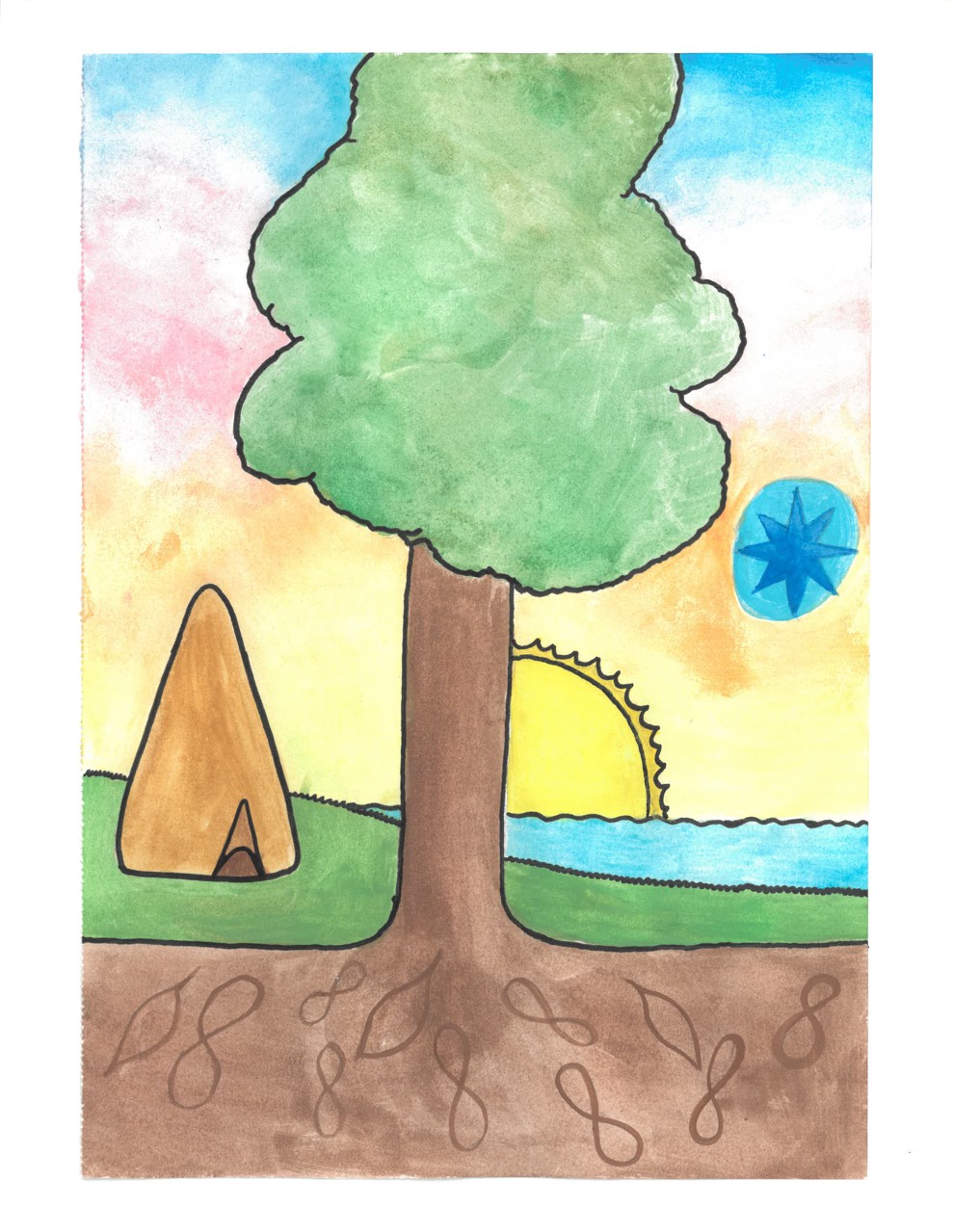 “I chose to paint this image because each element represents an important part of my identity and connection to nature. The sunset in the background represents the passing of time and the natural cycle of the moon, reminding us that life moves in continuous rhythms, reminding me to appreciate each and every day. The tree is a symbol of strength and growth, while its roots show how deeply connected I am to my heritage. Within the roots, the feather represents honour, spirituality and connection to the Creator. The Métis infinity sign represents who I am and my identity, showing that my culture and community continue forever. The day star is especially meaningful to me because my Indigenous name is Day Star Woman and it represents guidance, light and identity. It is blue, the colour Elder Willie Ermine gave me during my naming ceremony. Finally, the tipi represents home, community and tradition.”
 - Second prize: $700 - Emery Capewell, Campbell Collegiate High School “Rooted Together”
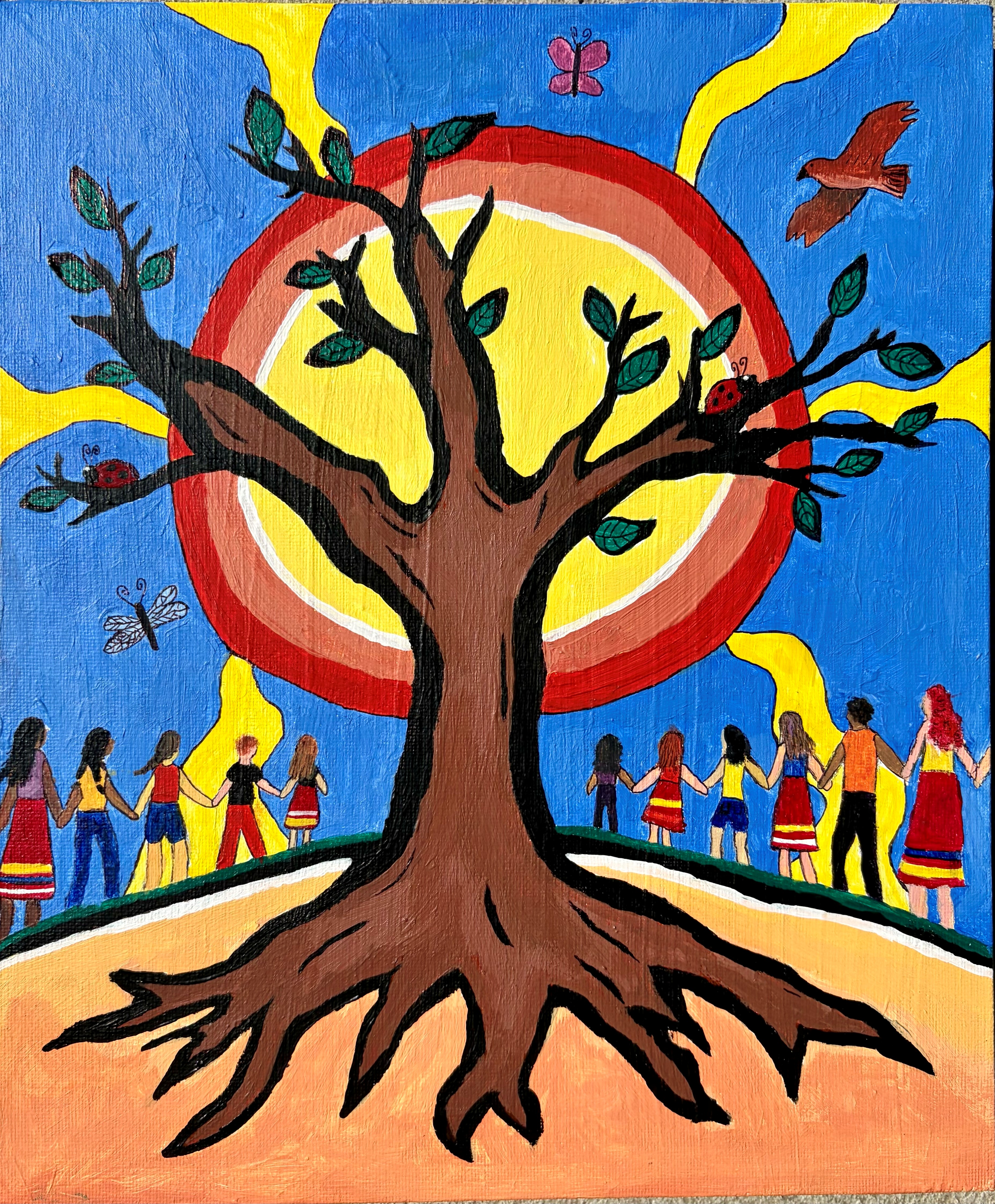 “I’ve lived in Regina my whole life and I included as much life in the painting that I could that would represent the city as a whole. Below the tree is a bunch of people – all ages, races and all sorts of differences. It's very diverse, just like how Regina is. I believe diversity makes us stronger and Regina has an incredibly strong community, so it was important to represent that. Some of the women are wearing red ribbon skirts, this symbolizes MMIWG. In the high-right corner, I included a bird and off a bit to the left in the middle is a butterfly soaring high, way above everything else. Then on the left and slightly above the people is a dragonfly. I tried to show diversity among animals as well. Then if you look at the tree, in the branches are two ladybugs. I love ladybugs and I have always seen them as a lucky symbol.”
 - Third prize: $500 - Syndel Sienna-Elise Smoke, F.W. Johnston High School
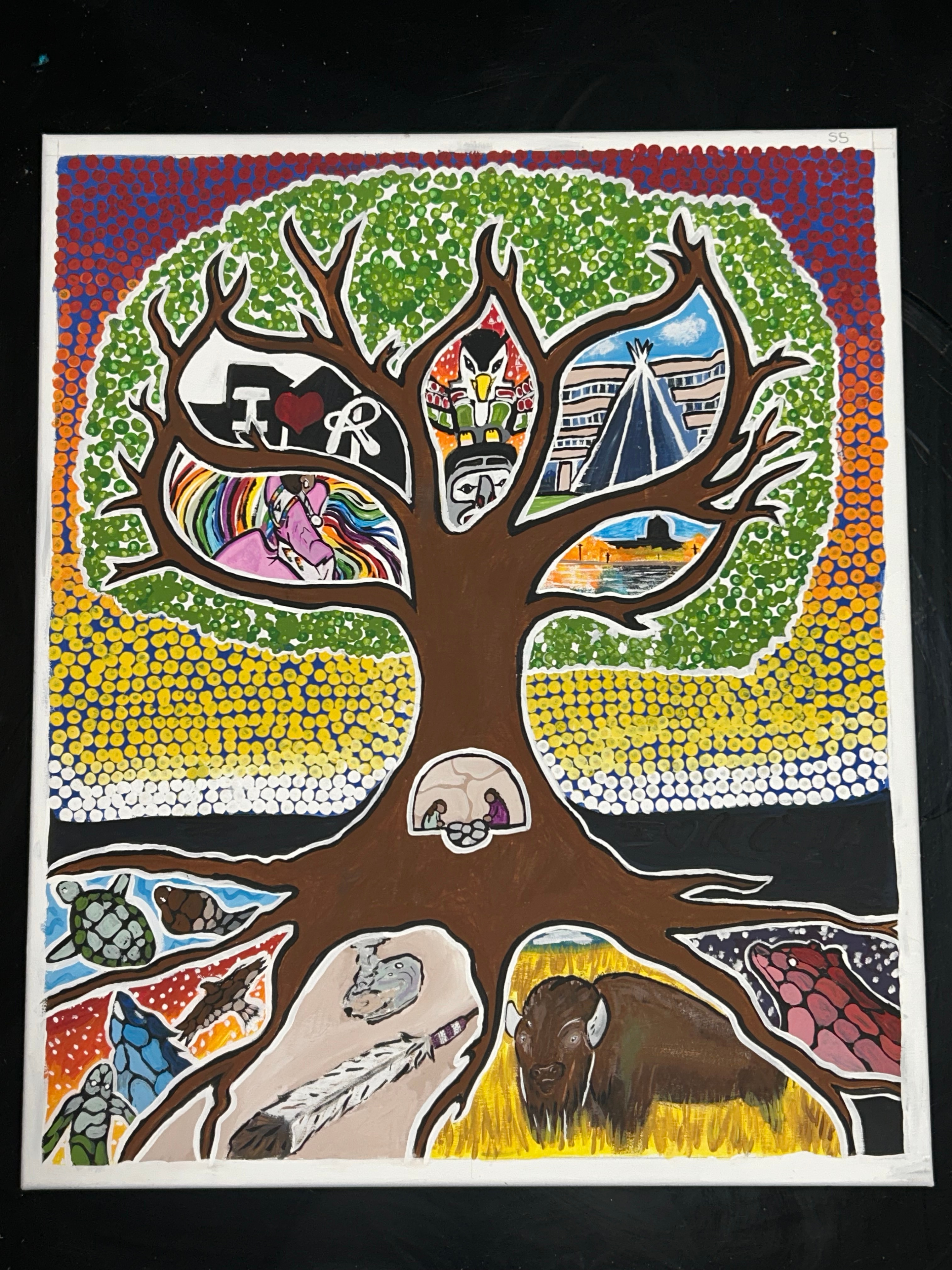 “My culture is very important to me and I’m glad that the city is offering this opportunity to showcase Indigenous art. In the painting, I made the roots represent how the seven Grandfather teachings and medicine are the root of our culture and the branches show how that knowledge can grow and help the community. The sweat lodge in the middle of the tree shows how no matter much we grow, our culture will always be a part of ourselves. In the branches, I chose landmarks that are in Regina and represent how far Indigenous people have fought for the right to help develop the city to include Indigenous peoples’ culture and identity.”
 - Youth Recognition Awards (two): $250 each
- Keira Lumberjack, Scott Collegiate High School
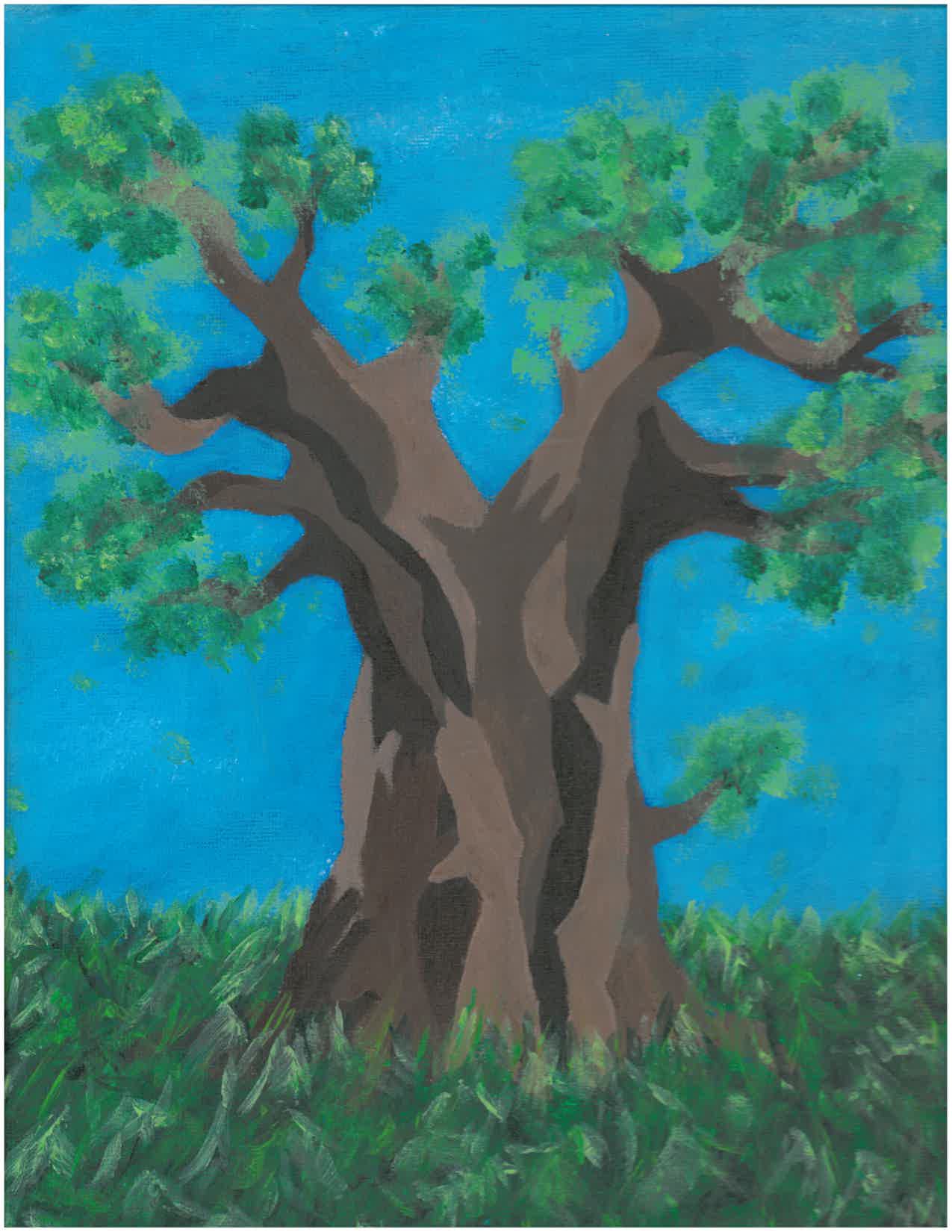 “I painted this with the thought of my community and people in mind. There is an Indigenous belief that everyone and everything is connected and its own being, and I wanted to symbolize that in my piece. I wanted to integrate the illusion of hands within the bark to show the changed life between plant and flesh. The hands coming together and uniting is what’s causing the tree to sprout. We come to learn and grow from one another when we are together, giving life to connection between each other.”
 - Noah McCabe, Michael A. Riffel High School “Connected Between Worlds”
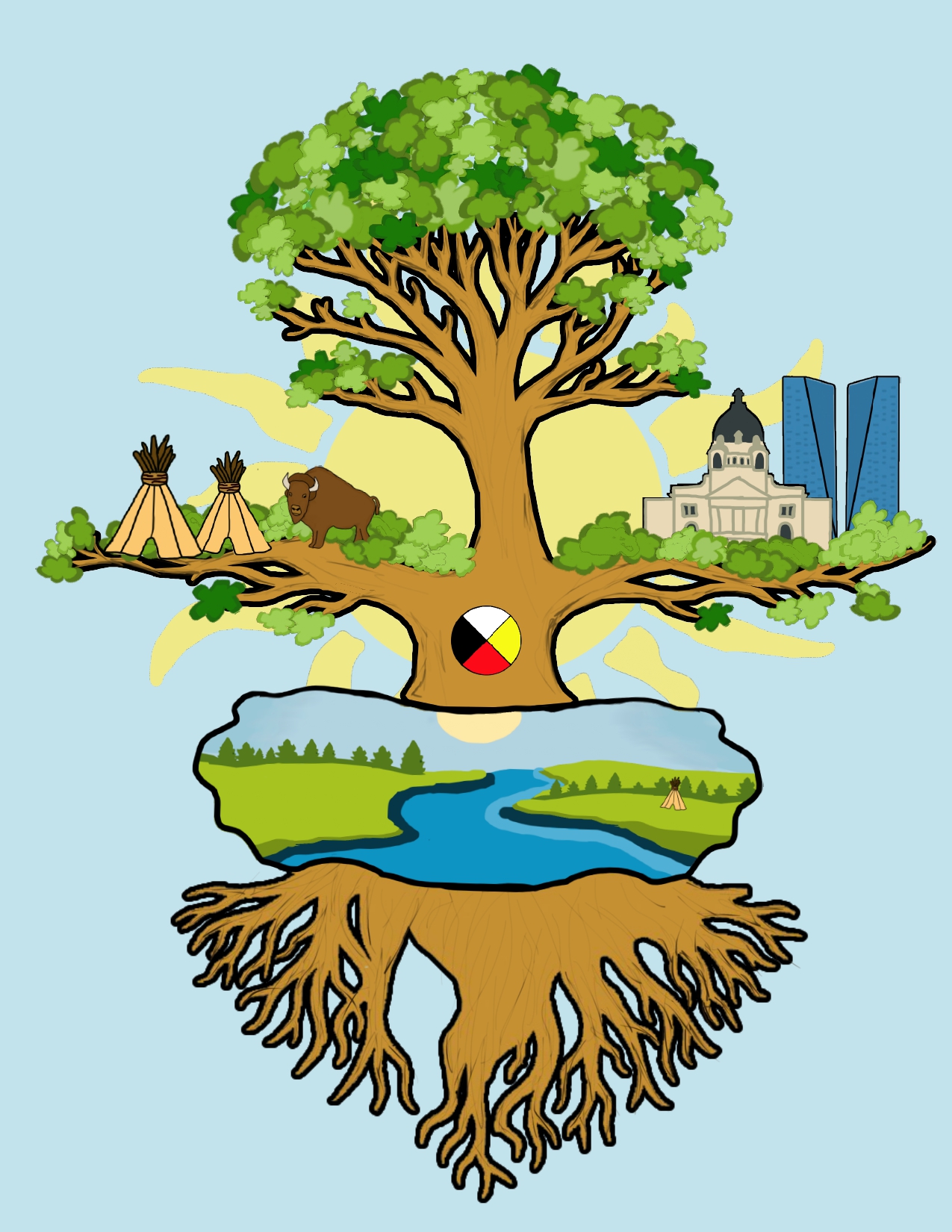 “I am a part of the Keeseekoose First Nations. My piece carries the theme of the Tree of Life. In the roots of the tree there is a scene to visualize the connection to the land and to show what the land was like before the city was built. On the right side of the piece, there is the Legislative building and the McCallum Hill Towers to show the heart of Regina. On the left side of the piece, there are tipis and a buffalo to show the Indigenous peoples and the connection between both worlds. In the background, I have added a sun to show that light and recognition will be worked towards as a symbol of hope and progress.”
- Keira Lumberjack, Scott Collegiate High School
Participants were asked to grant the City permission to reproduce their work in publications and communication materials, including social media, related to the contest and recognition of finalists.
Copyright and Moral Rights
Subject to the license granted to the City and the modifications to the design described herein, the finalists retain copyright and moral rights to their design. The City of Regina respects the cultural, creative and intellectual rights of Indigenous youth and the importance of protecting cultural knowledge and imagery.
The Indigenous Advisory Committee (IAC) and City staff appreciate the time and effort that all 25 students contributed to this initiative. We are thrilled to announce that all 25 submissions will be included in the final version of the Urban Forest Management Plan, subject to the artists’ consent.
Congratulations to all participants!