
What is Traffic Calming?
Traffic calming is a tool or process of ensuring that motorists do not exceed the posted speed for a roadway.
How Traffic Calming Works
Traffic calming uses a combination of engineering, education, and enforcement to improve road safety.
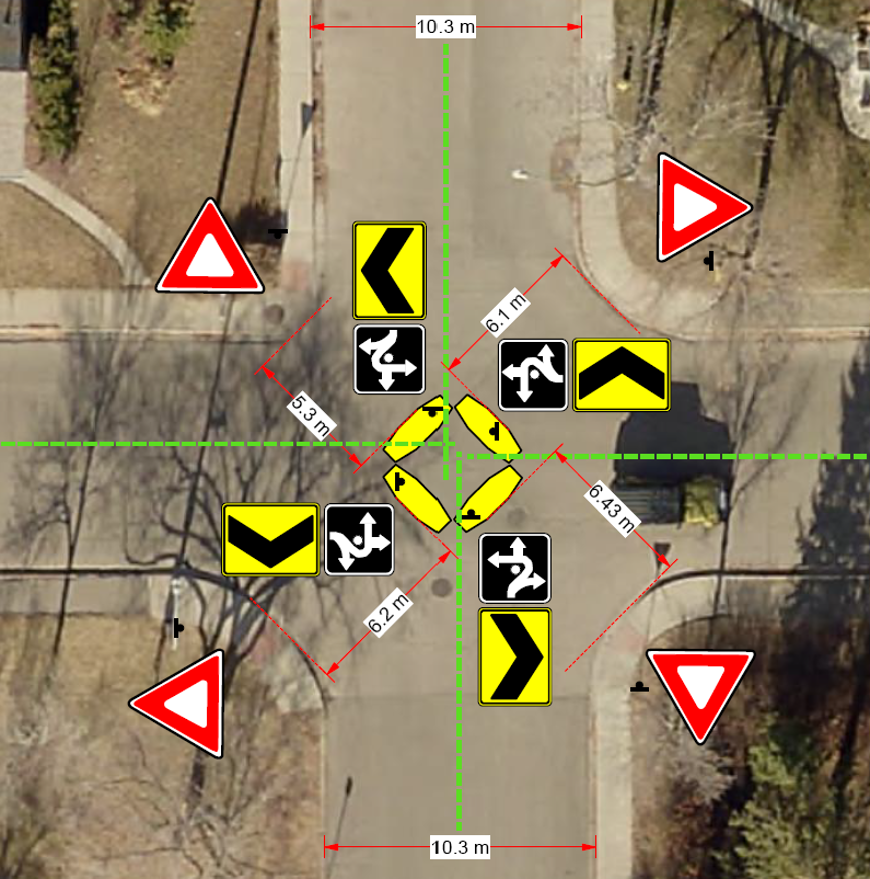
- Engineering: Physical design measures, such as curb extensions, medians, roundabouts, and horizontal or vertical deflections, are used to influence driver behavior and reduce vehicle speeds.
- Education: Awareness initiatives help drivers understand road rules and associated risks. These include speed feedback signs, pavement markings, public education campaigns, and vehicle-activated signs.
- Enforcement: Measures such as fixed and portable speed cameras or radar ensure compliance with traffic laws and reinforce safe driving practices.
Benefits of Traffic Calming
Traffic calming supports safer roads and neighborhoods by reducing vehicle speeds. The City conducts annual speed reviews and installs traffic calming measures near schools and playground zones to improve driver awareness and compliance. In 2024, 18 traffic calming installations were completed, with an additional 15 installed in 2025
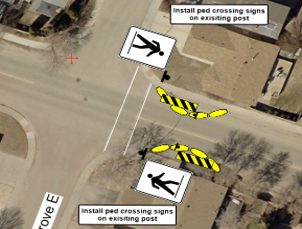
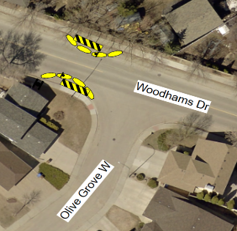
Speed feedback trailers are a key traffic calming measure, placed on streets and rotated regularly to educate drivers and encourage compliance with posted speed limits. The City currently operates 16 trailers, rotating them across up to 224 locations each year. Eight additional trailers have been purchased to support the 2027 program expansion.