
The Northwest Regional Wastewater Lift Station (NRWLS) is a major infrastructure project that will increase capacity and expand wastewater pipelines to support new developments in northwest Regina. It will support growing neighbourhoods like Coopertown, Westbrook and Rosewood and improve service for existing neighborhoods like Westhill Park and Maple Ridge.
Wastewater from residences is collected by sewer mains that connect to a larger trunkmain that connect to a lift station. A lift station is a facility that pumps wastewater through a forcemain pipe when the land is too flat for it to flow downhill on its own.
The NRWLS project will:
- Add a wastewater collection trunk which is a large pipe that collects flow from smaller sewer lines;
- Increase pumping capacity with the lift station;
- Provide reliable service as the northwest area grows; and
- Meet environmental standards.
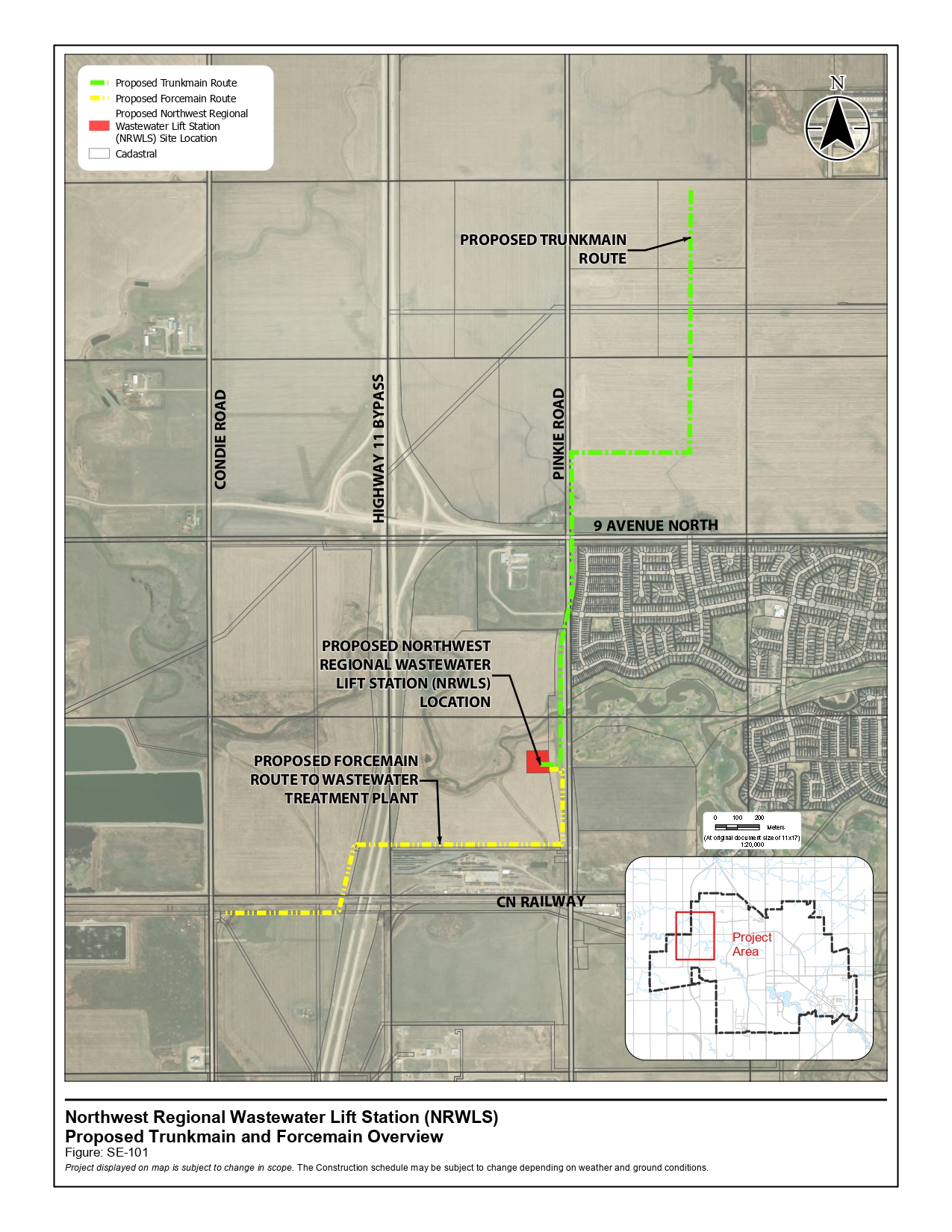
The lift station will be located at 190 Pinkie Road. Pipe routes and alignments will be finalized through design work currently underway. Construction is scheduled for 2027 and 2028.
Design Phase
The NRWLS is currently in the design phase which involves the following work:
- Evaluating route options for trunk mains and force mains;
- Assessing future wastewater demand;
- Designing how the station will operate day-to-day;
- Identifying environmental requirements;
- Planning safe and efficient construction approaches;
- Reviewing existing underground pipelines and utilities;
- Site survey work, including drilling boreholes; and
- Installing monitoring wells which are small, marked pipes above ground.
Site Survey and Test hole Work
Planning for this project requires site surveys and drilling test holes to understand the topography and soil conditions shape and elevation of the existing ground. The project team also measures and records the location of existing underground pipelines and utilities to inform the design. Test hole work involves drilling boreholes and installing monitoring well pipes in some locations.
Planning Final Layout
The final site layout will be chosen by looking at how well each option would work, based on land requirements, connections to existing sewer pipes, environmental factors, how well it would run, and how it could affect nearby residents, landowners and businesses.
The objective is to build the lift station and place pipes on available public land and along existing or planned utility routes. If private land or utility easements are required, landowners will be contacted directly.
Project Outcomes
The benefits of the NRWL project include:
- Providing wastewater service capacity to support the development of new neighbourhoods in the northwest.
- Improving wastewater service capacity for existing neighbourhoods in the northwest.
- Freeing up wastewater capacity in other parts of the City to improve existing neighbourhoods and support infill development projects.
- Providing reliable service.
- Meeting environmental regulations to prevent sewage bypass (when wastewater is released before it is fully treated, which can happen when there is more wastewater than the system can handle).
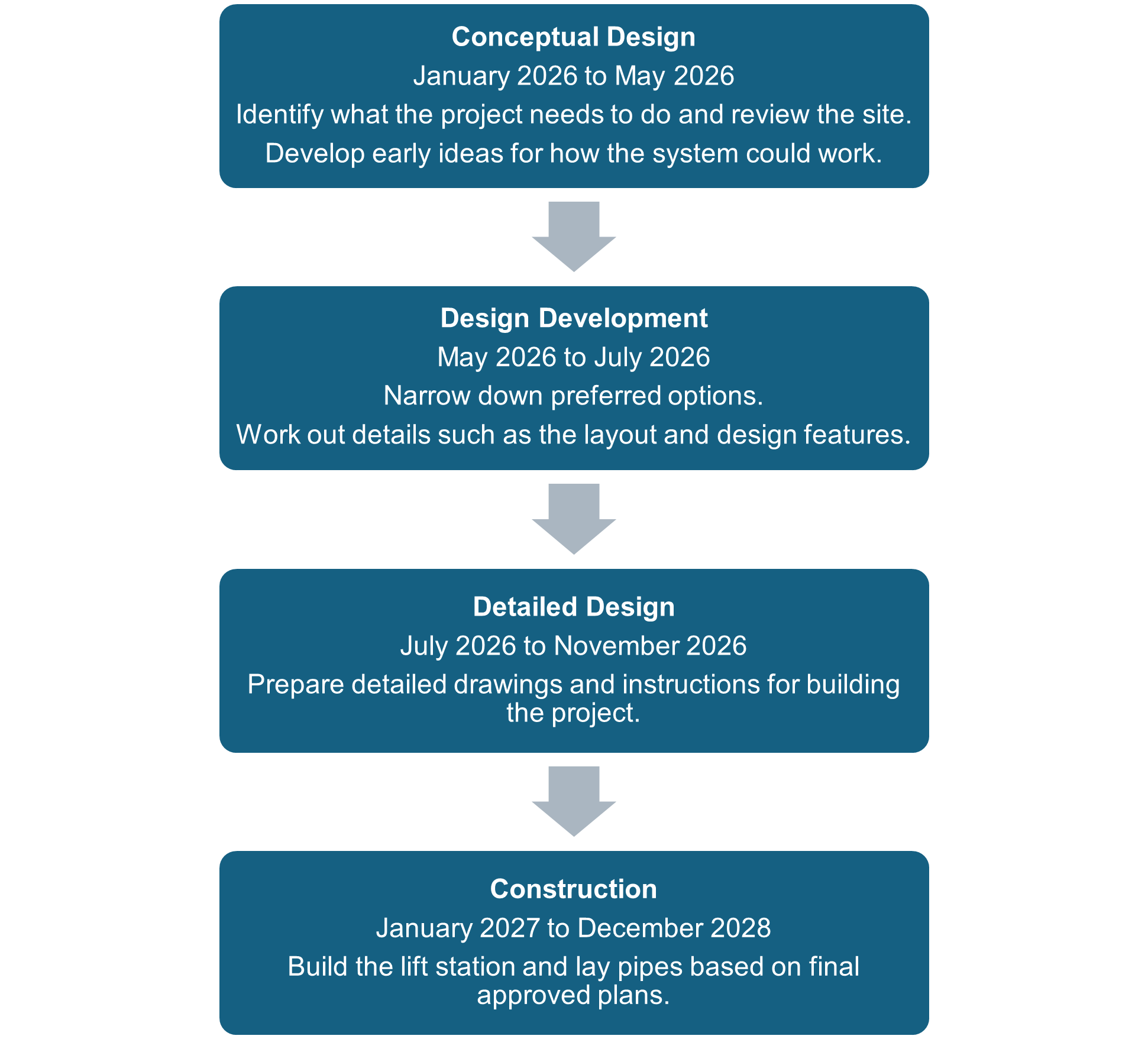
Learn more about the timeline for each phase of this project.
Learn more about map of proposed locations.
Review the proposed site locations and neighbourhoods that will benefit from the new lift station when it is complete.
This map shows the proposed locations of the lift station and trunk main pipelines.
This map shows the existing and future neighbourhoods that will benefit from the new lift station.
Find the answers to your questions about this project.
What is a wastewater lift station?
A lift station is a facility that pumps wastewater through pipes when the land is too flat for it to flow downhill on its own.
Why is this project needed?
This project will help support current service needs and planned growth in northwest Regina by adding pumping capacity and backup support to keep service reliable.
Was this project approved by Council?
Yes, the Northwest Regional Wastewater Lift Station was approved by Council in July 2025.
What will this project cost?
Council approved an investment of$66.8 million for this project along with another $8.6 million for the Westerra Wastewater Lift Station. The City has also applied for a grant to cover a portion of the cost through the Canada Housing and Infrastructure Fund. The final project cost to the City will not be known until there is a contract for construction based on market conditions. The final project design will be proposed as part of a budget submission to Council.
How is this project being funded?
Council has approved front-ending construction of Northwest Regional Wastewater Lift Station. Municipal front-ending is a cost-sharing approach where a municipality initially funds infrastructure that developers would typically pay for and then developers repay a portion of the cost over time.
Who are the external partners and how are they working with the City?
The City is working with a joint project consultant team, Associated Engineering and Stantec Consulting to finalize the design and lead the project construction.
What is the timeline for this project and what phase are we at currently?
Planning and detailed design work for this project is underway and on schedule to finalize key design, layout and location of the project between May and July 2026. The detailed design phase will wrap up by November 2026, with the final plans being approved. Construction is set to take place between 2027 and 2028.
Where will the lift station and pipes be located?
The project is planned for northwest Regina.The lift station is located at 190 Pinkie Rd. The exact location and layout of the pipes are still being finalized as the design work continues. Where possible, new pipes will follow existing or planned utility routes.
Will any private property be impacted?
The preference is to use public land and existing utility routes where possible. Crossing private properties may still be required in some areas. In the event land acquisition or utility easements are required, affected property owners will be contacted directly.
If the work is mainly happening on public land, why are you surveying some private property?
While the preferred option is to use public property, completing the pipe networks may require crossing current private property in some areas. This is why surveyors from the project team are seeking permission to access private land directly from landowners. The team is working with the property owners and any impacted farmers to ensure minimal impact.
Who is surveying the land for this project and how are they communicating with private landowners?
StantecConsultingare conducting site topographical surveys on certain parcels of land around Coopertown and Rosewood Park, as well as land west of Highway 11 and north of Canadian National Railway. Site surveys will also take place on Crown lands west of Pinkie Road and south of Wascana Creek.
Stantec and the City are working to communicate directly with developers, landowners and farmers who hold leases on certain areas of private land to limit impacts.
What are site surveys for and how do they impact the property?
Planning for this project requires site surveys to understand the topography of the existing ground surface as well as collecting records of the location of existing underground pipelines and utilities to inform the design.
What areTest holes(Drilling, drillholes, boreholes) and how do they impact the property?
Test holesinvolve drilling holes, deep into the ground, collecting soil samples and determining what types of soils are encountered at various depths. The soils are collected and studied to inform the design and future construction. Some locations may require a monitoring well, which is a pipe installed (white PVC pipe extending three or four feet above ground and flagged for easy identification). Monitoring wells are used to measure ground water levels (if present) and for sampling (if required). Test holes are backfilled to avoid future settlement.
How will this affect development and new service connections?
This project is part of the long-term servicing plan for the area. Developers will continue to follow the City’s standard servicing and approvals process. As the design is finalized, the City will provide updated information on timing, connection points and any requirements for new developments.
What can nearby residents expect during construction?
Construction may bring temporary changes such as work crews and equipment in the area, some noise and short-term access changes. The team will work to limit disruptions and share updates as schedules are confirmed.
There may be temporary lane restrictions or traffic detours near work areas at certain times. If traffic changes are needed, they will be communicated in advance whenever possible.
How will the environment be protected?
The project will follow environmental regulations and best practices. This includes managing runoff and erosion, protecting nearby natural areas and safe handling of materials during construction.
Will there be odour or noise once the station is operating?
Lift stations are designed to control odours and reduce noise. The design will include features such as sealed systems, ventilation and odour-control equipment, and sound-reducing measures as needed.